
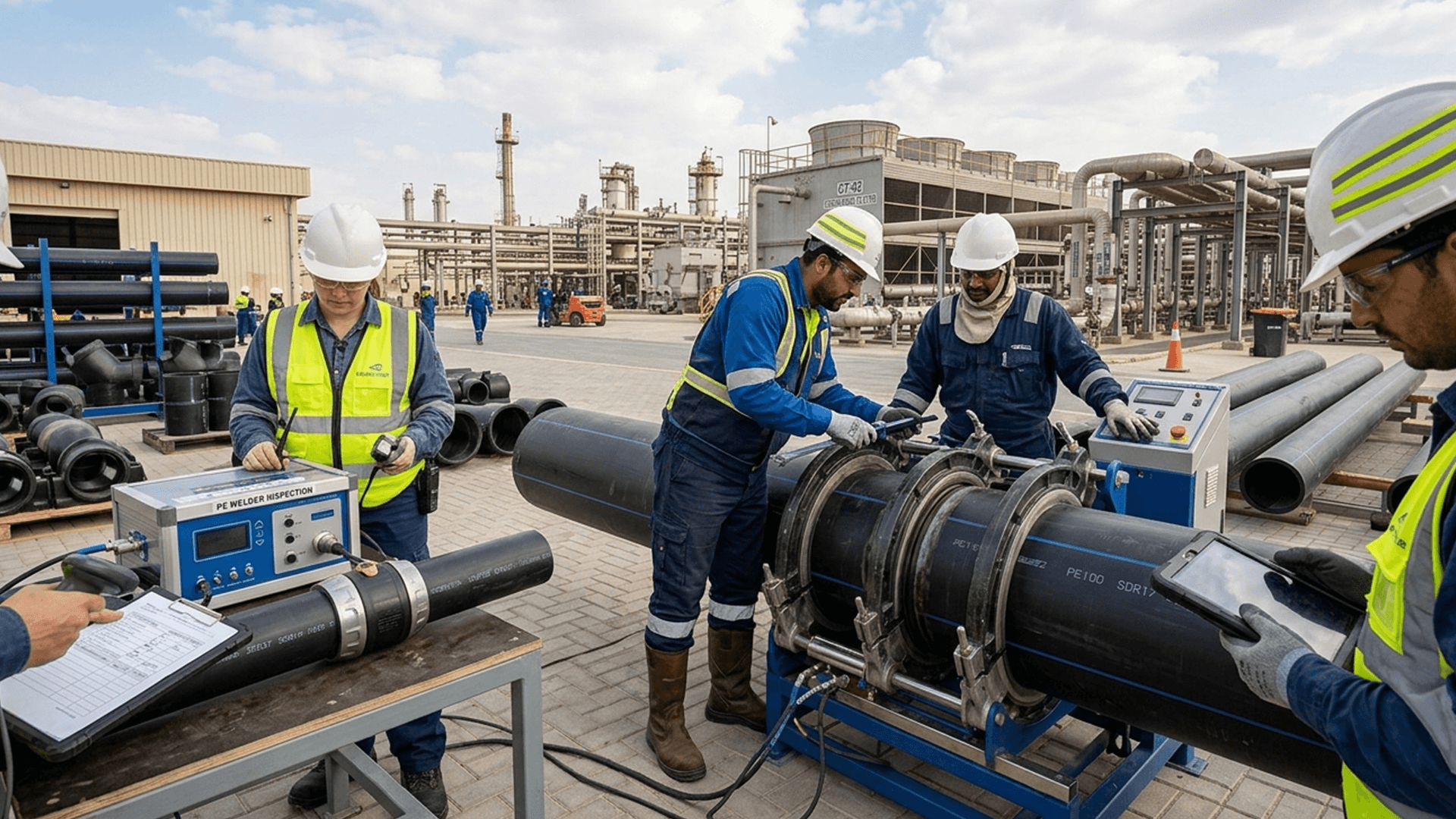
The Scope
Certification of Polyethylene Pipe Welders verifies the competence, qualifications, and practical skills of personnel performing welding activities on polyethylene piping systems used in gas distribution and other utility networks. The certification ensures that welders possess the knowledge and technical capability to perform welding operations safely, consistently, and in compliance with recognised industry standards and regulatory requirements.
The certification supports quality assurance, operational safety, and the integrity of polyethylene piping systems by ensuring that welding activities are carried out by qualified personnel.
The Standard
This certification is based on:
UNI 9737 – Qualification of Polyethylene Pipe Welders
EN 13067 – Qualification of Welders for Thermoplastics Welding
UNI CEI EN ISO/IEC 17024 – Conformity Assessment – General Requirements for Bodies Operating Certification of Persons
UNI/TS 11508 – Qualification of Welding Procedures for Thermoplastic Materials
UNI EN 1555-5 – Polyethylene Piping Systems for Gas Supply
Applicable national regulations governing polyethylene pipe welding activities
The certification evaluates the welder's theoretical knowledge, practical skills, and ability to perform welding operations in accordance with established technical and safety requirements.
Who Should Apply
This certification is suitable for personnel and organisations involved in the installation, construction, maintenance, and repair of polyethylene piping systems.
The certification is particularly relevant for:
Polyethylene Pipe Welders
Gas Pipeline Installation Technicians
Utility Network Contractors
Gas Distribution Companies
Water Distribution Contractors
Infrastructure and Civil Engineering Contractors
Pipeline Construction Companies
Utility Maintenance Service Providers
Thermoplastic Welding Specialists
Organisations involved in polyethylene pipe installation and maintenance
This certification is ideal for professionals seeking to demonstrate welding competence, comply with regulatory requirements, enhance employability, improve quality and safety standards, and support the integrity and reliability of polyethylene piping systems.